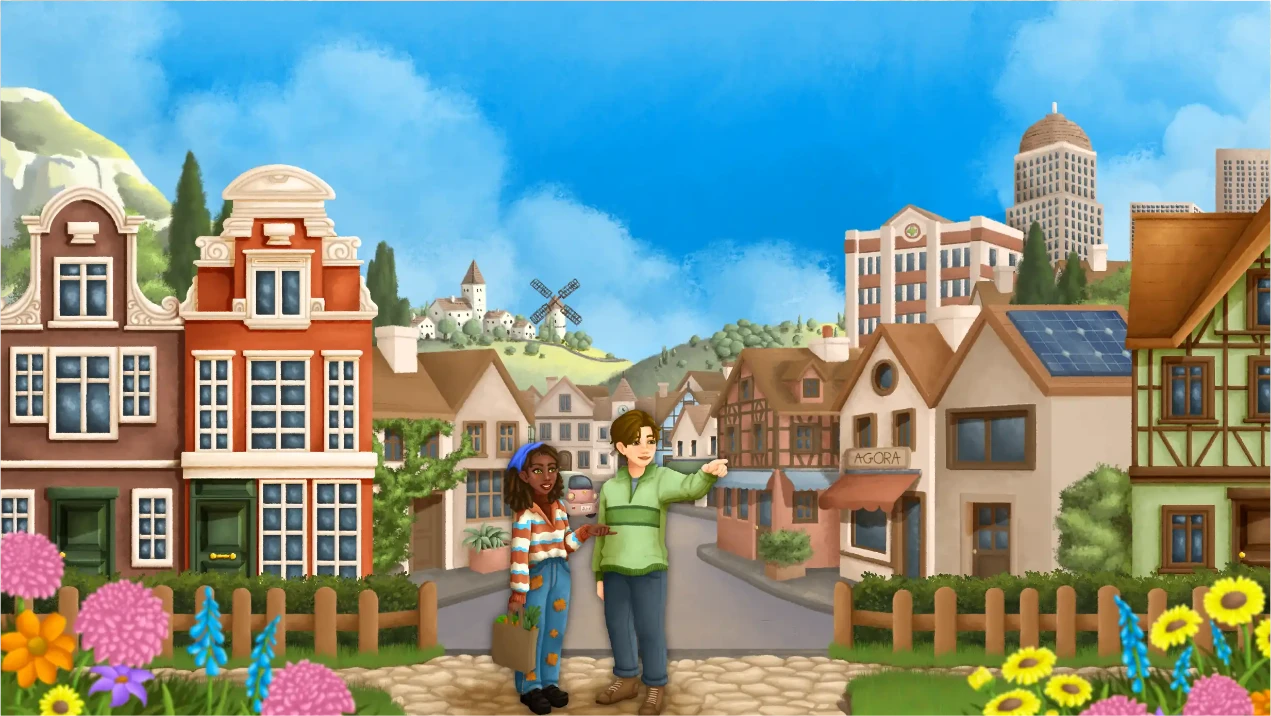
Co-creation

Turn a care, support, or training need into an interactive experience

Cats & Foxes works with healthcare providers, social care organizations, nonprofits, and public bodies to build custom experiences in VirtualSociety.

We begin with a situation your team encounters in practice and turn it into something people can use in a session, on site, or remotely. This can cover patient education, mental health, training, or disability support.

VirtualSociety Health & social care Training Works across devices
VirtualSociety
From an idea to something people can use We define the brief, write the scenario, build a prototype, test it with users, and train your team. Content can also be shared when that makes sense.

Built around the way your team works

You may need to explain a procedure, prepare someone for an unfamiliar place, practice a routine, train staff, or help an audience understand a difficult subject.

Off-the-shelf material rarely fits the situation exactly, while a fully custom build can take too long. VirtualSociety gives us a starting point, so the result can be tailored without rebuilding everything each time.

Ways to work with us

You know the subject and the people who will use the experience. We know how to turn that knowledge into an interactive tool in VirtualSociety.

Interactive prototype

Put an idea in people’s hands before committing to a full build.

Goal Define the brief with your specialists, build a first version, and gather feedback from the people who will use it.
Deliverables
  • project brief
  • working scenario
  • 1 environment
  • 1 interactive flow
  • testable version
  • feedback summary

Best for : testing a healthcare, education, or support idea without asking your team to manage the technical production.

Reusable shared experience

Build it once, then adapt and reuse it.

Goal Create an experience that other teams or sites can use as a starting point.
Deliverables
  • complete experience
  • usage rights
  • documentation
  • optional royalties

Best for : networks, multi-site organizations, or specialist teams that want to share an approach across several settings.

Training for your team

Learn to adapt existing experiences yourself.

Goal Give your team the skills to update experiences and create new scenarios.
Deliverables
  • training
  • templates
  • support
  • coaching

Best for : teams that want more control over their content without handling the underlying development.

What we can work on together

  • Patient education: explaining procedures, equipment, routines, and care pathways.
  • Mental health education: understanding a condition, emotion, situation, or behavior.
  • CBT and graded exposure: phobias, anxiety, social situations, or preparation for a place.
  • Disability and social care: preparing for a journey, making a situation clearer, or training staff.
  • Prevention and public awareness: immersive experiences that make a difficult subject easier to grasp.

How a project moves forward

1

Brief

We agree on who the experience is for, where it will be used, and what it needs to achieve.

2

Scenario

We map out the steps, instructions, characters, objects, and responses.

3

Prototype

We build a first version that your team can try.

4

Testing

Depending on the project, we gather feedback from staff, patients, caregivers, or the intended audience.

5

Launch or share

Once tested, the experience can stay within your organization or be adapted for other teams under the agreed rights.

Projects already underway

We already use this approach with partners working in patient education, disability support, training, and mental health.

Nancy University Hospital: patient education

We developed an experience with the cystic fibrosis team and therapeutic education unit to help children understand and practice the steps of aerosol therapy.

View Leo the Wolf

J-B Thiery Association: disability, training, and inclusion

We are working with the J-B Thiery Association on immersive tools for training, disability awareness, and inclusion.

View J-B Thiery

Independent practitioners: mental health and psychoeducation

Psychologists are exploring scenarios around social skills, difficult social situations, phobias, anxiety, and addiction.

Discuss a scenario

Have a project in mind?

Tell us who it is for, what situation you want to work on, where it will be used, and any timing constraints. We will suggest a sensible place to start.